

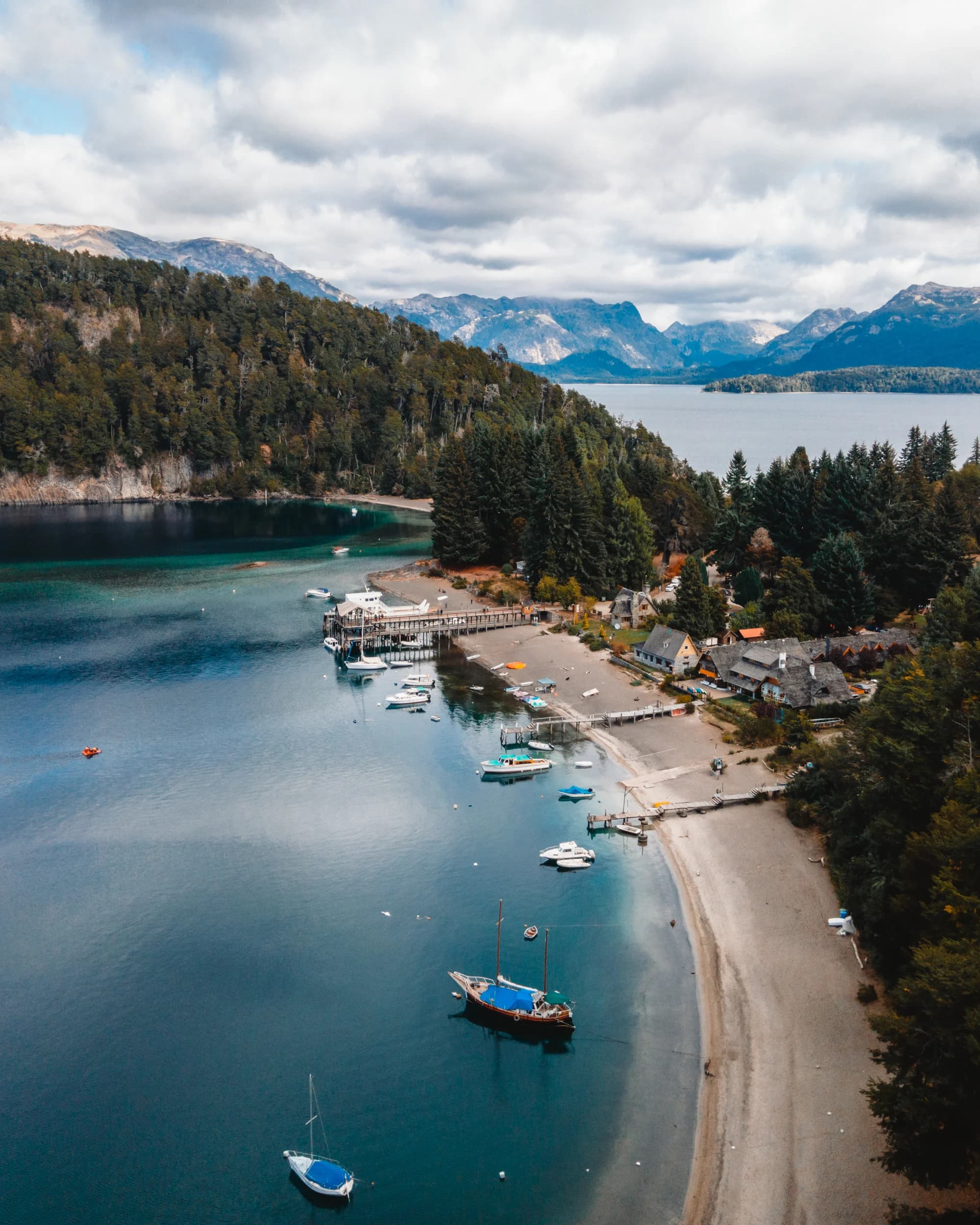
Casco y Circuito Histórico
The founding quarter, walkable with the self-guided circuit.
The destination
This area has been inhabited for roughly 10,000 years. Since then, indigenous peoples, conquistadors, missionaries, explorers, adventurers and settlers have each left their mark.
Some say we have less than a century of history, but the evidence shows that it all began a very long time ago.
This area has been inhabited for roughly 10,000 years. Since then, indigenous peoples, conquistadors, missionaries, explorers, adventurers and settlers have each left their mark.
When the Europeans arrived from Chile in the sixteenth century, they found pre-Columbian populations organised in small groups living by hunting, fishing and, in some cases, settled agriculture. Over 300 years the conquering presence intensified, alongside missionaries, explorers and settlers.
1620
The lake appears on the maps
The Spanish captain Juan Fernández sights Nahuel Huapi for the first time, arriving from Chile.
1670
The Jesuit mission
Father Nicolás Mascardi founds the Nahuel Huapi Mission on what is now the Huemul peninsula. It is abandoned in 1717.
1876
The flag on Nahuel Huapi
The surveyor Francisco P. Moreno reaches the lake and raises the national flag for the first time. He would later donate the park's first land.
1932
The founding of the town
On 15 May the first radio-telegraph station is installed. That date is taken as the founding of Villa La Angostura.
1934
The National Park is created
Law 12,103 is passed and Nahuel Huapi National Park is created. The area's tourism era begins.
2011
The Puyehue eruption
Between 30 and 40 cm of ash fall on Villa La Angostura, the town closest to the Caulle range. The activity lasts ten months.
19th century
The relationship between the pre-Columbian peoples and the Europeans developed through conflict and slow acculturation, bringing economic and social change. By the late nineteenth century, Chile and Argentina had consolidated their hold on the territory.
Francisco Pascasio Moreno played a key part in settling the border dispute, and donated the first land that would become Nahuel Huapi National Park.
1902 – 1932
In 1902, with the border question with Chile settled, the national government created the Nahuel Huapi Agro-Pastoral Colony around the lake, made up of 625-hectare plots. The settlers took up farming, grazing and forestry.
On 15 May 1932, on the initiative of a few residents, the first radio-telegraph station was installed in the town. That is the date taken as the founding of Villa La Angostura. Among those behind it was Primo Capraro, an Italian pioneer who arrived at Correntoso in 1903 and was central to the development of the whole region.
from 1934 onwards
In 1934 Nahuel Huapi National Park was created and a new chapter began for the area, which gradually turned into a tourist destination. Exequiel Bustillo, as president of the park, drove the necessary works, including the opening of what is now Route 40 — then National Route 231 — which until that point was little more than a track.
Until the early 1990s the town was visited mainly in summer by families with second homes and by anglers. In the late 1970s work began on the Cerro Bayo ski resort, on the initiative of a group of Cumelén Club residents and the Belgian pioneer Jean Pierre Raemdonck.
The access road was fully paved in 1994, and from then on Villa La Angostura grew into the town it is today.
1620
The Spanish captain Juan Fernández discovers Nahuel Huapi from Chile.
1670
The Jesuit father Nicolás Mascardi founds the Nahuel Huapi Mission near the Huemul peninsula.
1717
After the deaths of Mascardi and his successors, the mission is abandoned.
1782
The Spanish pilot Basilio Villarino sails the Río Negro and the Limay as far as the confluence with the Collón Curá.
1791
Friar Francisco Méndez makes the first of four journeys to Nahuel Huapi.
1849
The Chilean naval officer Benjamín Muñoz Gamero explores the route to Nahuel Huapi.
1855
Vicente Gómez and Felipe Geisse arrive from Chile at the end of the Blest arm. Francisco Fonk sails part of the lake for scientific purposes.
1871
George Chworth Musters, an English sailor, reaches Chief Sayhueque's territory after an epic journey across Patagonia.
1876
The surveyor Francisco P. Moreno reaches Nahuel Huapi and raises the national flag for the first time.
1879
General Julio A. Roca begins the Conquest of the Desert.
1881
The Argentine Army, under General Conrado Villegas, reaches Nahuel Huapi.
1883
Eduardo O'Connor sails the launch «Modesta Victoria», explores the northern area and discovers Lago Correntoso.
1889
Jarred Jones, an American settler, establishes himself at Teckel Malal, on the lands of Chief Inacayal's people.
1890
José Tauschek, Bernardo Azócar and Federico Ise survey, from Chile, the Mirador or Puyehue pass, today Cardenal Samoré.
1894
A Chilean expedition places the first border marker at Puyehue. Carlos Wiederhold, founder of Bariloche, reaches Nahuel Huapi.
1900
The 60-tonne iron steamer «Cóndor» is launched, brought over the Andes from Chile. It sailed the lake for almost half a century.
1902
The British arbitration ruling settles the border in Argentina's favour. The Nahuel Huapi Pastoral Colony is created and 400 hectares are set aside for future towns.
1903
The surveyor Moreno donates his land at Puerto Blest to create a nature park. Primo Capraro arrives at Correntoso.
1904
The first salmonid fry are released; exotic deer and wild boar are introduced.
1907
Aarón Anchorena is granted use of Victoria Island. At Correntoso there is already a sawmill and Capraro's first small hotel.
1914
The Chile-Argentina Company closes. Capraro buys part of its assets and becomes the region's leading developer.
1931
Ezequiel Bustillo first sees Nahuel Huapi and buys the land where the Cumelén Club would stand.
1932
On 15 May the radio-telegraph and post office opens: the founding of Villa La Angostura. On 4 October Primo Capraro dies.
1934
Law 12,103 is passed and the National Parks are created. The railway reaches Bariloche.
1935
On 5 October the stretch of road to La Angostura and Correntoso opens.
1937
National Parks lays out the settlement on the Quetrihué isthmus. Plots go on sale and the town's tourist character takes shape.
1943
Villa La Angostura becomes the seat of the Los Lagos Department. The first Development Commission is formed, chaired by Francisco Capraro.
1944
The heaviest snowfall in living memory: more than a metre of snow.
1945
The first doctor arrives, Dr Carlos G. Benisch.
1955
The National Territories of Río Negro and Neuquén become provinces.
1956
Work begins on the road to Chile via Puyehue. The hospital and the new post office building are built.
1960
Earthquake and volcanic eruptions in Chile. The port of Bariloche is lost.
1962
The province of Neuquén acquires the Messidor residence.
1965
Jean Pierre Raemdonck arrives from Belgium. Motocross is born in Villa La Angostura.
1968
The hospital burns down. President Onganía visits and pushes for the first paving of the road to Bariloche.
1978
A massive troop presence because of the looming conflict with Chile. Television arrives for the football World Cup.
1984
The road begins to be paved and a new period of growth starts: a new power station, school and neighbourhoods.
1985
The Bouillon Plan for tourism development is drawn up.
1988
The first environmental group forms and awareness grows.
1991
Public pressure halts the development of a wetland meadow.
1995
Villa La Angostura reaches almost five thousand residents, with harmonious building growth and a clear focus on tourism.
2001
Pressure from residents sees off the «Segunda Angostura» project, a dam at the mouth of the Limay.
2004
An accident at Cerro Bayo: a chairlift falls.
2009
Villa La Angostura has its own Municipal Charter, as a first-category municipality.
2011
Puyehue erupts. Between 30 and 40 cm of ash fall and the activity continues for ten months. Many residents leave.
2012
The new Regional Hospital building opens.
2015
The motocross world championship is held. On 22 April the Calbuco volcano erupts.
Seeing it for yourself
The Tourism Department offers a self-guided circuit through the historic quarter, where Villa La Angostura began. The Municipal History Museum, in that same area, completes the route.
The founding quarter, walkable with the self-guided circuit.
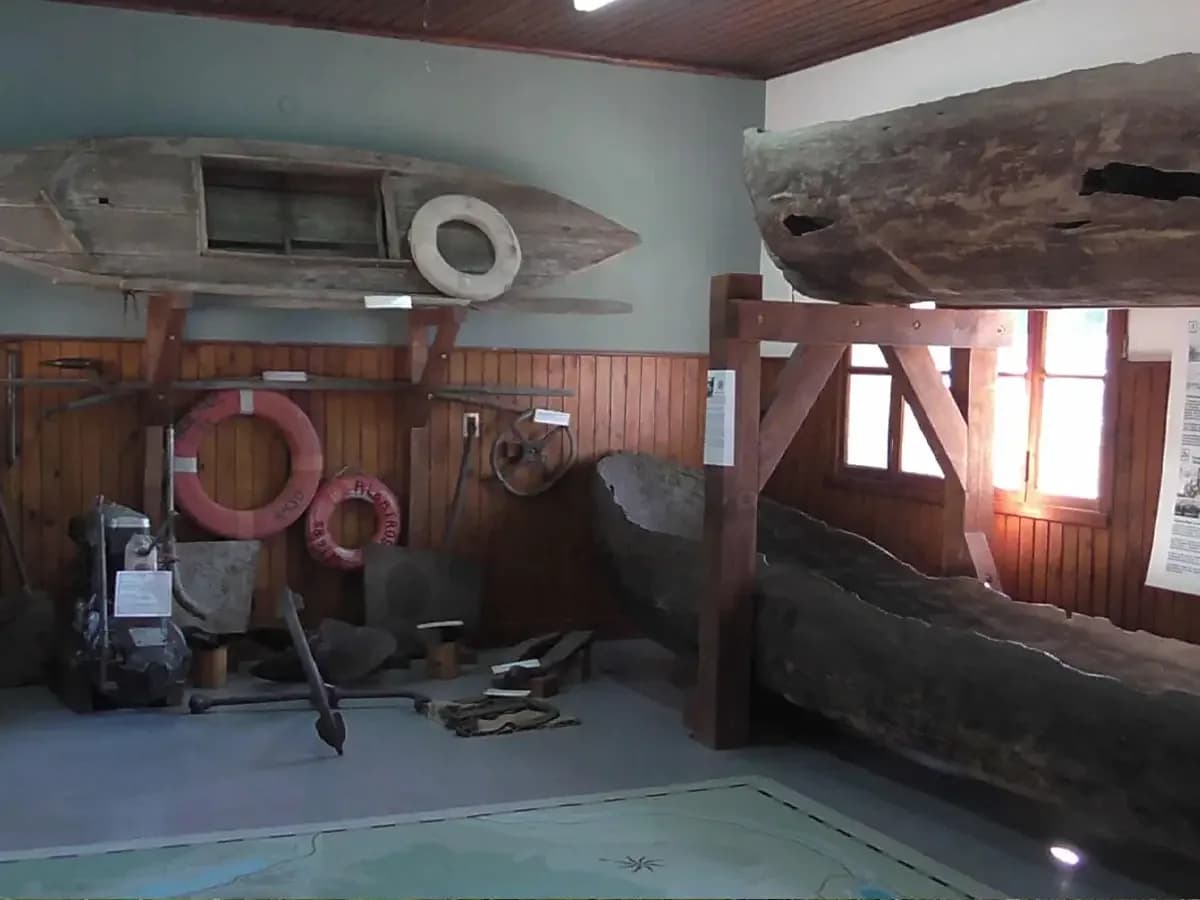
The history of Villa La Angostura and the region, in the historic quarter.